

Hiking Gear for Women Over 40: What to Pack and Why
Quick Summary
The best hiking gear for women over 40 is gear that fits well, suits the conditions, and keeps the load light. Start with footwear that fits, a waterproof-breathable rain layer, water, and a light source, then add trekking poles and a pack once you know how far you typically walk.
- Try on hiking boots late in the day, wearing the socks you plan to hike in.
- Break in new boots on short walks before attempting a long hike.
- Hiking pants usually beat leggings on rough or exposed trails.
- Carry a headlamp with a spare battery or a charged power bank.
- Buy gear in stages and test each item on a short hike first.
Table of Contents
- Why Gear Choices Change After 40
- Women's Hiking Clothes for Summer: What to Wear on the Trail
- Waterproof Hiking Gear for Women Over 40
- Women's Hiking Pants vs. Leggings: Which Works Better
- Trekking Poles and Packs That Ease the Load
- 10 Essential Items for Hiking
- Choosing Your First Set of Gear Before Your Next Trail Day
- Frequently Asked Questions
Why Gear Choices Change After 40
Last Updated: November 5, 2026
Hiking gear for women over 40 is not just a smaller version of what younger hikers buy. Many hikers ask the same questions as they get older: what fits a changing body, what keeps us warm without overheating, and what we can carry without paying for it the next day. The right kit depends on your trail, your climate and your body, and it is worth choosing with those in mind.
The core idea is simple. Pack for the conditions you will actually face, and choose gear that keeps the load light and the fit comfortable over a full day on your feet. The sections below walk through each category and explain how to decide.
Women's Hiking Clothes for Summer: What to Wear on the Trail
Summer hiking calls for light, breathable layers that dry quickly and protect your skin. Look for moisture-wicking shirts, lightweight pants or shorts, and a hat with a brim. A long-sleeve layer in a sun-protective fabric can do more for you than sunscreen alone on a long, exposed route.
Fit matters more than style here. A relaxed cut lets air move and reduces chafing on longer hikes. Try on clothes while wearing your usual socks and pack, because a pack strap can shift how a shirt sits on the shoulders. That same attention to a comfortable cut and reduced chafing carries over to minimalist gym clothes, where freedom of movement matters just as much.
Waterproof Hiking Gear for Women Over 40
Waterproof gear is most useful when you know what you need it to do. A lightweight shell keeps out rain. A waterproof-breathable layer keeps you dry from the inside as well, which matters on cool, wet days when sweat builds up.
For shelter, the Night Cat 2-Persons Backpacking Tent is a waterproof option at $86.99 with aluminum poles and a rainfly, and its listing describes a setup that uses hooks on the poles rather than threading them through sleeves. You can also browse a waterproof inflatable family tent with carry bag. A tent like this suits a hiker who wants a compact, weather-ready base at camp.

Women's Hiking Pants vs. Leggings: Which Works Better
Hiking pants usually beat leggings on rough or exposed trails. They offer pockets, more durable fabric, and room to move on steep sections.
Choose pants if you expect scrambling, brush, or changing temperatures. Choose leggings for easy, dry-weather walks where comfort and stretch come first.
The decision usually comes down to four things: fabric, fit, pockets, and how the leg opening interacts with your footwear. For a closer look at judging gear durability before you buy, see how to judge durability before you buy.
Fabric. Look for nylon or polyester blends with a bit of spandex.
Fit. Pants should let you step up onto a rock without pulling tight across the hip or knee. A gusseted crotch and articulated knees make a real difference on steep terrain.
Pockets. Pants with zippered thigh or hip pockets let you carry a phone, a snack, or a small map without stopping to open your pack.
Leg opening and footwear. This is where pants and leggings meet your boots. A straight or slightly tapered leg that sits over the boot collar keeps debris out and reduces rubbing.
OKHEALING Foldable Carbon Fiber Trekking Poles →
Footwear Fit, Break-In, and Blister Prevention
Boots and trail shoes are the single biggest comfort variable on a long day, and they deserve more attention than a passing mention.
- Fit first. Try shoes on late in the day, when feet are slightly larger, and wear the socks you plan to hike in. You want roughly a thumb's width of space between your longest toe and the front of the shoe, and a heel that stays locked in place when you walk uphill.
- Break them in. Wear new boots or shoes on short walks around the neighborhood and on one or two easy trails before a long hike. A few short outings can reveal hot spots before they become blisters.
- Pair with the right socks. A thin liner sock under a cushioned wool or synthetic hiking sock reduces friction. Avoid cotton socks, which stay damp.
- Prevent blisters. Keep toenails trimmed, lace firmly but not tightly across the midfoot, and stop at the first sign of a hot spot to apply tape or a blister bandage. A small roll of leukotape or athletic tape in your pack weighs almost nothing and pays for itself on the first long descent.
- Match traction to terrain. A deeper lug pattern grips loose dirt and mud; a shallower, stickier rubber compound is often better on smooth rock. If you hike mostly on maintained trails, a trail runner may be lighter and more breathable than a full boot.
Watch out: buying footwear online without trying it on can leave you with a boot that fits in the store but rubs on the trail.
Trekking Poles and Packs That Ease the Load
Trekking poles can help with balance and effort on descents and with a loaded pack. The OKHEALING Foldable Carbon Fiber Trekking Poles weigh 110 grams per pole and fold into five sections, priced at $51.99, with an internal antishock spring and available lengths of 110, 120, and 130 centimeters. Compare lightweight foldable carbon trekking poles before you buy.

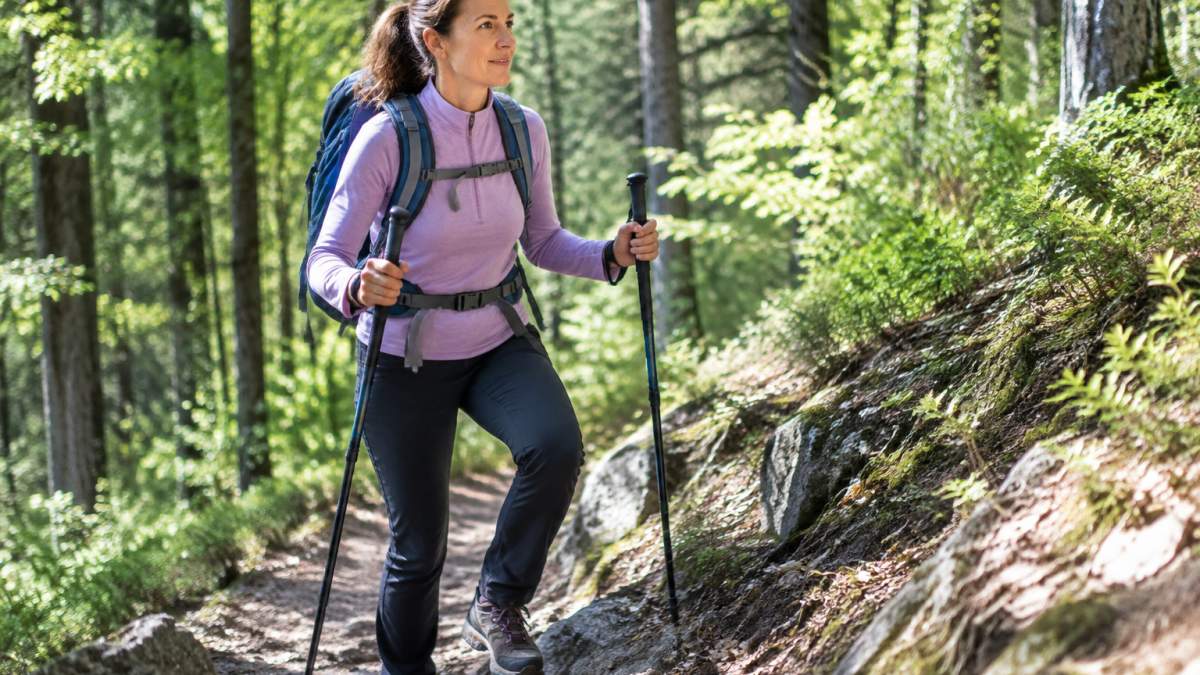
For carrying gear, the Naturehike Lightweight Nylon Outdoor Backpack holds 18 liters and folds flat for storage. At $39.99, it works well for shorter day trips. For heavier loads, look at a pack with a supportive frame and a fit that you can adjust at the waist and shoulders.
10 Essential Items for Hiking
A complete kit goes further than clothing: it covers water, navigation, light, first aid, and emergency supplies, and it scales with how long and how remote your hike is. For gear suited to longer routes, see camping gear for multi-day hikes. The ten items below are the core of a day-hike system. Build from this list, then adjust for conditions.
- Water and a way to treat or refill it. Carry more than you think you need on hot or exposed routes, and bring a filter or purification tablets if you will pass reliable water sources. Carry enough water for the full hike, with extra for hot weather.
- A rain shell. Even on a clear forecast, a lightweight waterproof-breathable shell earns its place in the pack. It doubles as a wind layer on exposed ridges.
- A warm mid-layer. A fleece or lightweight synthetic puffy adds warmth when you stop moving or when clouds roll in. Synthetic insulation keeps working when damp; down is lighter and more packable but loses warmth if it gets wet.
- Sun protection. A brimmed hat, sunglasses, and a long-sleeve UPF-rated layer protect you on exposed routes better than sunscreen alone, which needs reapplying every couple of hours.
- A headlamp. A headlamp such as the TrustFire MC12 Rechargeable LED Headlamp at $55.99 offers five modes and IPX8 waterproofing, and it keeps your hands free for other tasks. Carry a spare battery or a charged power bank.
- A pocket flashlight. A small light such as the Sofirn SE1 at $46.99 is useful for quick signaling and close-range tasks around camp.
- A first aid kit. At minimum: blister treatment, adhesive bandages, gauze, tape, an antihistamine, and any personal medication. Add a small knife or multi-tool.
- Navigation. A paper map and compass plus an offline map on your phone. Do not rely on cell signal in the backcountry.
- Trekking poles. Poles reduce strain on knees and hips on descents and help with balance on uneven ground.
- Snacks and an emergency layer. Carry more food than you plan to eat, plus an extra insulating layer and an emergency blanket or bivy in case a short hike turns into a long one.
Adjust the List by Hike Length and Conditions
- Short, well-traveled day hike (under two hours): water, snacks, a light shell, sun protection, a small first aid kit, and your phone with an offline map.
- Half- or full-day hike: add the headlamp, navigation tools, a warm mid-layer, trekking poles, and a small repair kit.
- Remote or shoulder-season hike: add an emergency blanket, extra food and water, a communication device if you will be out of signal, and a warmer insulating layer.
- Hot weather: prioritize water capacity, electrolytes, and breathable sun protection; start earlier to avoid the heat of the day.
- Wet weather: add a pack cover or dry bag, waterproof gloves, and a shell with pit zips for ventilation.
- Cold weather: layer a base layer, an insulating mid-layer, and a shell, and carry extra gloves and a warm hat.
For overnight trips, add a sleeping pad. The Naturehike Ultralight Sleeping Pad is priced at $110.99, and the Naturehike Inflatable Mat Ultralight 5.8 is priced at $166.99. Cook meals with the Widesea Portable Aluminum Camping Cookware Set at $41.99, which nests its pieces into a single hard anodized aluminum pot.
Watch out: treating the ten-item list as a fixed packing list rather than a starting point can leave you underprepared when the weather, terrain, or hike length changes. Match the kit to the actual conditions you expect.
The core day-hike kit comes down to a handful of items, and a few have specific prices and specs worth comparing.
| Item | Value | Note |
|---|---|---|
| TrustFire MC12 headlamp | $55.99 | Five modes, IPX8 waterproof |
| Sofirn SE1 pocket flashlight | $46.99 | Quick signaling and close-range tasks |
| Naturehike Ultralight Sleeping Pad | $110.99 | For overnight trips |
| Naturehike Inflatable Mat Ultralight 5.8 | $166.99 | Higher-priced sleeping mat option |
| Widesea Camping Cookware Set | $41.99 | Nests into one hard anodized aluminum pot |
Choosing Your First Set of Gear Before Your Next Trail Day
Start with the things that affect safety and comfort most: footwear that fits, a rain layer, water, and a light source. Add poles and a pack once you know how far you typically walk. Buy in stages, and test each item on a short hike before you commit to a longer one.
Use a simple test: if an item adds weight without solving a problem you have, leave it at home.
Frequently Asked Questions
What should a woman wear for a day hike?
Start with a moisture-wicking base layer, a breathable shirt, and hiking pants or quick-drying shorts that allow full leg movement. Add a light insulating layer and a packable rain shell, since mountain weather can shift within an hour. Choose trail shoes or boots with a secure heel and good traction, and wear hiking socks made from merino or synthetic blends to limit blisters. Avoid cotton, which holds sweat and chills you once you stop moving.
Is it better to hike in leggings or hiking pants?
Hiking pants generally perform better on the trail. They usually include a gusseted crotch for range of motion, reinforced knees, pockets for small essentials, and fabrics treated for quick drying and abrasion resistance. Leggings work well for flat, mild trails and warm conditions, but they can lack pockets, tear more easily on brush, and offer less protection from sun and scratches. Many hikers keep leggings for lower-effort outings and switch to pants for longer or rougher routes.
What waterproof hiking gear do women need?
Most hikers need a waterproof rain shell with taped seams, a hood, and a fabric rated for sustained wet weather, plus a pack cover or a pack liner to keep contents dry. Waterproof trail shoes or boots with membranes help in wet conditions, though they can trap heat in summer. Gaiters are useful for muddy or snowy routes. Check the shell's hydrostatic head rating and test seams before a long trip.
What should women over 40 pack for a day hike?
Pack the ten essentials first: navigation, a headlamp with spare batteries, sun protection, insulation, first aid, a knife or multi-tool, fire starter, emergency shelter, extra food, and extra water. Add a rain layer, a lightweight pack that fits your torso length, and trekking poles if your joints or balance benefit from them. Keep the pack weight to roughly 10 to 15 percent of your body weight for comfortable day hikes.
