

How to Organize Camping Gear for Travel
Last Updated: November 15, 2026
Quick Summary
To organize camping gear for travel, first inventory everything you own, then sort items into labeled categories like shelter, sleep, kitchen and safety. Store each category in its own container and load the vehicle in reverse order of use so the items you need last go in first.
- Write down every item, including small pieces like lighters and headlamps.
- Sort gear into categories such as shelter, sleep, kitchen, lighting, tools and first aid.
- Place heavy bins low and near the center of the cargo area to reduce sway.
- Store food in airtight containers away from sleeping gear to deter animals and odors.
- Clean and dry all gear after each trip before returning it to labeled bins.
Table of Contents
Organizing camping gear for travel comes down to one habit: knowing what you own before you pack it. Here is a practical system for loading gear so it's easy to find on the road. Learning how to organize camping gear for travel saves time at the campsite and keeps you from unpacking everything to find a single stove part.
Start with a full inventory. Walk through your garage, closet and vehicle, and list every item you plan to bring. For longer routes, see a guide to the gear needed for multi-day hikes to check for missing items. Group the list by use: shelter, sleep, kitchen, clothing, safety and toiletries. A written list works better than memory, especially on trips longer than a weekend.
- Write down every item, even small ones like lighters and headlamps
- Note the quantity and condition of each piece
- Flag anything that needs repair, cleaning or replacement before departure
- Keep a copy of the list in your phone or glove box for quick checks
Next, build a packing checklist from that inventory. Check it against the length of your trip, the weather forecast and the number of people in your group. Compare your list against a complete weekend camping gear checklist. A two-night trip needs fewer cooking supplies than a week-long stay, so cut what you don't need.
Sort Your Gear Into Categories and Zones
Once the inventory is done, sort each item into a category. Common categories include shelter, sleep, kitchen, lighting, tools and first aid. Keeping each category in its own container makes it simple to grab what you need without digging.
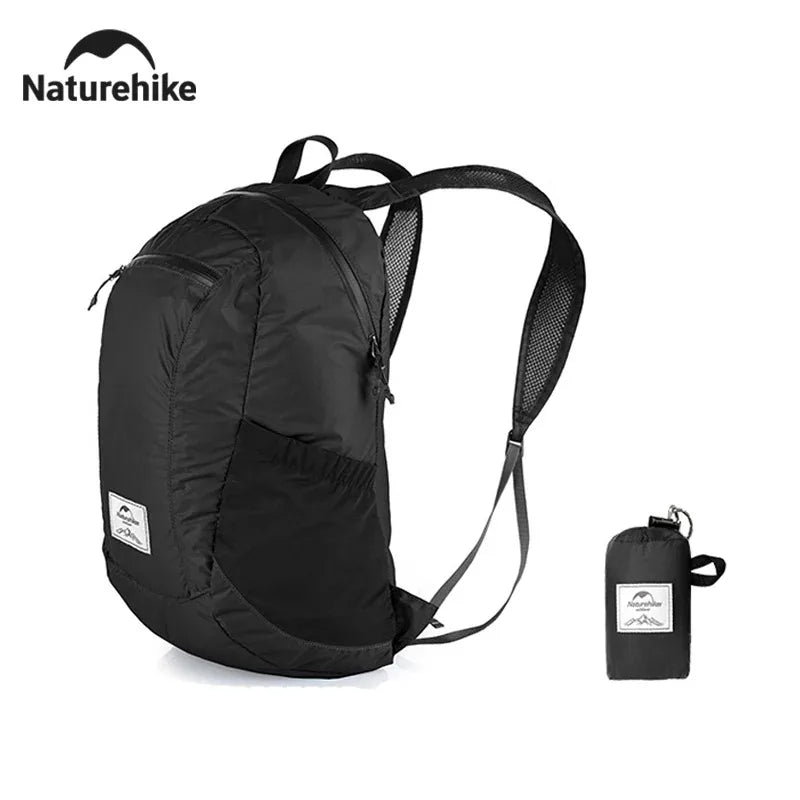
Think of your vehicle as a set of zones. Put heavy gear like cooking equipment and water containers low and near the center. Place lighter, frequently used items such as chairs, rain gear and a day pack near the rear door. A lightweight backpack suits separating smaller, frequently used items within these zones. Storing items in zones lets you unload only what you need at each stop.
- Shelter: tent, stakes, poles, tarp, rain fly
- Sleep: sleeping bags, pads, pillows, camp blankets
- Kitchen: stove, fuel, pots, utensils, cooler
- Safety: first aid kit, flashlight, fire starter, repair kit
Choose Camping Gear Storage Containers That Fit Your Vehicle
Storage containers do most of the work when you organize camping gear for travel. Look for stackable, labeled bins with secure lids. Clear containers help you spot contents at a glance, while opaque ones keep dust and sunlight off gear.
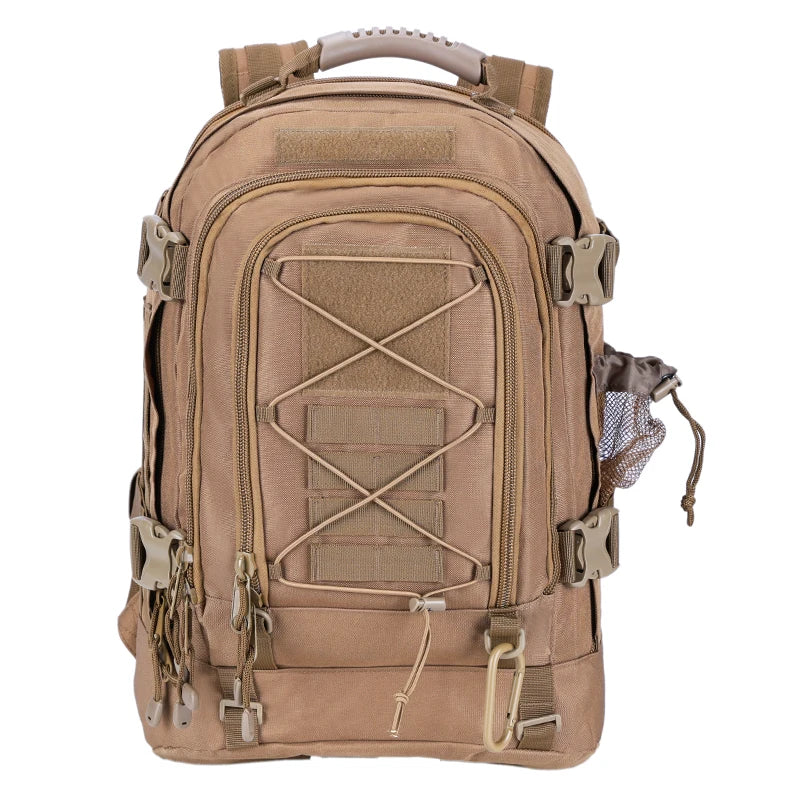
Measure your cargo space before you buy. Bins sized to fit the footprint of your trunk or rear seat can load faster and shift less while driving. Soft-sided storage sacks work well for sleeping bags and clothing, since they squeeze into odd corners. A large, durable pack can also carry bulky camping gear that won't fit in bins.
How to Organize Camping Gear in Bins, Step by Step
Follow this process when packing the bins:
- Empty each category onto a flat surface and check every item.
- Place heavy items at the bottom of each bin.
- Pack smaller items such as tent stakes or utensils in pouches or cubes.
- Label each bin on the front and the lid.
- Stack bins so the most-used category sits on top or near the door.
Packing cubes help keep small gear from shifting. A camp kitchen kit, with utensils, a cutting board and a dish towel, can live in one bin so cooking supplies stay together.
Car Camping Organization: Loading Order and Weight Balance
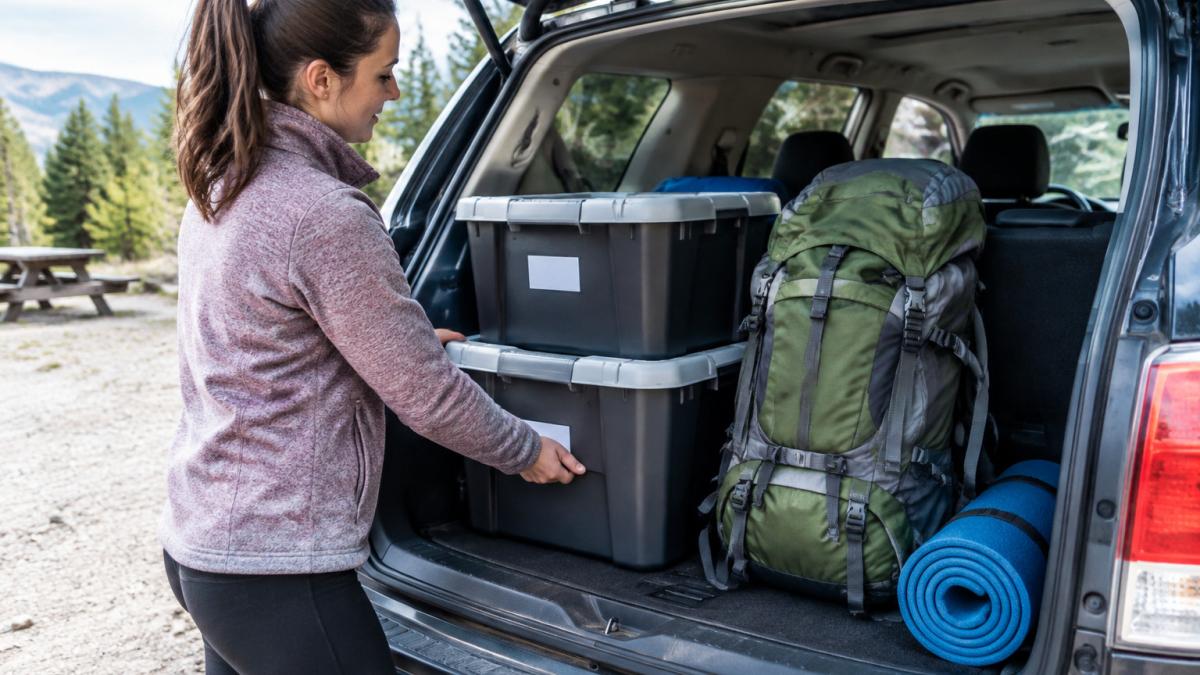
Load the vehicle in reverse order of use. Gear you need last goes in first. Put the tent and sleep system in the back, then the kitchen bin, then the chairs and daily items closest to the door.
Keep weight balanced across the vehicle. Heavy bins should sit low and near the center of the cargo area rather than piled high on one side. This reduces sway on winding roads and keeps the suspension working as intended. Check your vehicle's owner's manual for its maximum payload before loading.
Camping Gear Storage Ideas for Wet, Dirty and Odor-Prone Items
Wet, muddy and smelly gear needs its own system. Store damp tents and tarps in a separate bag so they don't soak other items. Keep dirty clothing and camp shoes in a sealed bin with a lid. Bring a small bucket or tote for muddy items so the vehicle stays clean.
Food and hazardous items need extra care. Store food in airtight containers and keep it away from sleeping gear to deter animals and avoid odors (Leave No Trace Seven Principles (U.S. National Park Service)). Keep fuel canisters and stove fuel in a ventilated area, upright and away from heat. Never pack these items loose in the cabin.
Pro-Tips and a Post-Trip Reset for Your Next Adventure
- Pack a small bin for quick-access items like headlamps, sunscreen and bug spray
- Re-label bins when you change your gear list
- Dry and clean all gear before storing it at home to prevent mildew
Unpacking matters as much as packing. After each trip, clean and dry everything, then return items to their labeled bins. Update your inventory list so next time you know exactly what's missing.
Keeping your system consistent makes each trip easier to plan. The Naturehike Lightweight Nylon Outdoor Backpack ($39.99) is a good fit for organizing smaller, frequently used items, while the LQARMY 65L Outdoor Tactical Backpack ($58.99) carries bulky gear for longer trips. The Heavy Duty All Terrain Folding Utility Wagon ($88.99) helps move loaded bins across campsites with less effort.
Frequently Asked Questions
How do you organize camping gear for a trip?
Start by laying out everything you plan to bring and sorting it into zones such as kitchen, sleep, shelter, clothing and toiletries. Use a written checklist so you can confirm each item before packing. Assign each zone its own labeled bin or bag, then load the containers in the order you will need them at camp. Keeping zones separate means you can pull out the cooking kit without unpacking the tent. Review the list after each trip and remove anything you never used.
How do I organize camping gear in bins?
Choose sturdy, stackable bins with secure lids and label each one with its contents and zone. Put heavier items such as cookware and water containers on the bottom and lighter items like clothing on top. Keep small pieces such as utensils, headlamps and first aid supplies in smaller pouches inside the bin so they do not scatter. Store bins that you need first, like the kitchen kit, near the rear hatch so you can reach them without moving the rest of the load.
How do you keep wet camping gear separate from dry gear?
Pack wet tents, tarps and rain gear in a separate waterproof bag or bin that you can seal. Let damp items air out when you get to camp or at home before you store them, since trapped moisture leads to mildew and odor. Keep the wet bag in a spot where it cannot leak onto clothing or sleeping bags. Designating one container for wet and dirty gear prevents the problem from spreading to the rest of your supplies.
How should I store camping gear when I get home?
Clean and fully dry each item before it goes back into storage. Check food containers for crumbs and empty fuel canisters before storing them. Repack bins with the same zone labels so the system is ready for the next trip. Store gear in a cool, dry place off the concrete floor, and keep bins on shelving to protect them from moisture and pests. Inventory your gear once a season so you know what needs repair or replacement.
