

Lifetime Alternative for Outdoor Gear That Lasts
Last Updated: November 10, 2026
Quick Summary
A lifetime alternative for outdoor gear is a product chosen for repairability, material quality, and long-term cost per use rather than the lowest sticker price. A $79.99 cot used for 100 nights costs about eighty cents a night, while a cheap cot replaced twice over the same period costs more and wastes your time.
- Look for 600D Oxford or heavier fabrics on cots and TPU nylon on inflatable pads.
- Confirm replacement parts like cot legs, valves, and patch kits are sold separately before buying.
- Buy off-season, when sleep systems and cold-weather gear drop in price.
- A durable cot for base camp plus a lightweight pad for the trail beats one compromise item.
- Prestige Outdoor Homes folding cots need no assembly and pack flat, and every order ships free.
Table of Contents
- What a Lifetime Alternative for Outdoor Gear Actually Means
- The Best Lifetime Alternative for Outdoor Gear Starts With Sleep Systems
- Lifetime Alternative for Outdoor Gear Reviews: What to Check Before You Buy
- How to Find Discounted Outdoor Gear Without Sacrificing Durability
- Best Outdoor Gear Websites for Long-Lasting Equipment
- Total Cost of Ownership: Price Per Use Beats Sticker Price
- Trade-Offs Between Lifetime Durability, Weight, and Performance
- Build Your Long-Term Camping Sleep Kit at Prestige Outdoor Homes
- Frequently Asked Questions
What a Lifetime Alternative for Outdoor Gear Actually Means
A lifetime alternative for outdoor gear is a product chosen for repairability, material quality, and long-term cost per use rather than the lowest sticker price. Shoppers often compare a cheap item's price against a durable item's years of service.
The math is simple once you stop shopping by price tag alone. A tent, pack, or sleep system that lasts several seasons can cost less per night than repeated budget replacements. The catch is that "lifetime" is a marketing word, not a standard. No federal rule defines it, so you have to read the construction yourself.
Below, we break down what actually lasts, where to spend, and how to build a sleep kit that holds up.
The Best Lifetime Alternative for Outdoor Gear Starts With Sleep Systems
Sleep gear is where the lifetime-alternative logic pays off fastest. You use it every single night of a trip, it takes the most abuse, and cheap versions fail predictably. A leaking air pad or a cot with a bent leg ends a trip early.
Start with the frame and the fabric. Inflatable pads still earn a place for backpacking weight savings, but they demand more care.
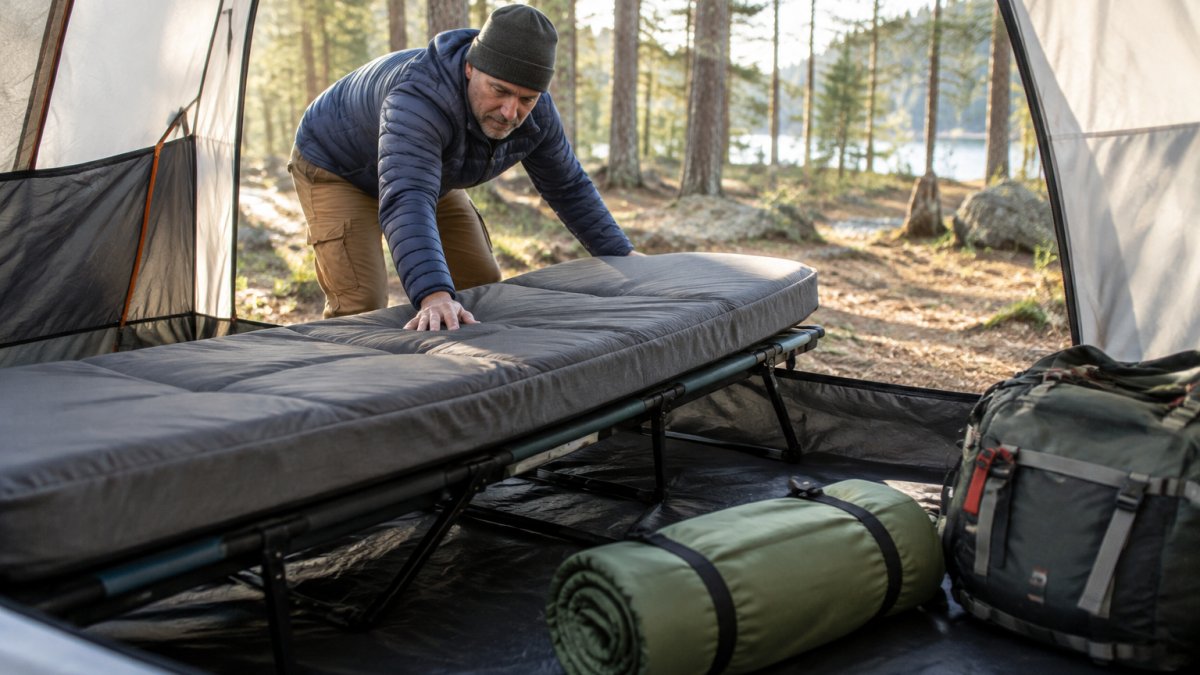
Cots, Mattresses, and Pads Compared Side by Side
Here's how the sleep options stack up on price, build, and best use.
| Option | Price | Best For |
|---|---|---|
| Portable Folding Camping Cot With Thick Mattress And Side Pocket | $79.99 | Car camping, base camps, guests |
| Foldable Metal Garden Lounge Chair With Pearl Foam Mattress | $73.99 | Backyard, tent, guest sleeping |
| Built In Pump Inflatable Camping Mattress | $143.99 | Couples, indoor/outdoor use |
| Naturehike Ultralight Sleeping Pad R4.6 | $110.99 | Backpacking, cold-weather trips |
Price
The folding cot with a thick mattress needs no assembly and packs flat. The Naturehike ultralight sleeping pad is an option when weight is a priority.


Lifetime Alternative for Outdoor Gear Reviews: What to Check Before You Buy
Before you trust any lifetime alternative for outdoor gear reviews, check three things: materials, warranty terms, and whether the item can be repaired. Reviews that skip these are just feature lists.
A durable cot or pad should name its fabric and frame material. "Heavy-duty steel" means little without a weight rating, so look for a stated load capacity. Repairability matters too. A pad with a field-repair patch kit beats one that's sealed shut.
For a deeper set of buying criteria, our durable camping gear buyer's guide walks through what to look for in person.
Materials, Warranty Terms, and Repairability
Materials decide lifespan more than any other factor. Look for 600D Oxford or heavier fabrics on cots, TPU nylon on inflatable pads, and powder-coated or reinforced steel frames. Thin PVC and single-stitch seams are the usual failure points.
Warranty terms vary widely, and the structure matters more than the length. Most outdoor brands separate coverage into two buckets: defects in materials and workmanship, which are typically covered for a stated period or, on premium lines, for the life of the product; and normal wear and tear, which is almost never covered. Read the fine print on what counts as normal use, because a warranty that voids on "commercial use" or requires a receipt you'll never find is worth less than a shorter warranty with a clear claims path.
Repairability is the part reviews skip. Ask three questions before you buy:
- Are replacement parts sold separately? A cot leg, a valve, a stuff sack, or a patch kit you can reorder extends the product's life by years. If the answer is no, the item is disposable no matter how it's marketed.
- Can the failure point be reached? A pad with a user-serviceable valve beats one sealed at the factory. A cot with bolt-on legs beats a welded frame.
- Is there a repair path? Some brands run repair centers or partner with gear-repair shops; others only offer replacement. A repair option keeps a favorite item in service instead of sending it to a landfill.
Our 7-step gear quality checklist shows how to inspect stitching, welds, and valves before you commit.
Watch out: a generous warranty means little if the brand has no parts or repair path. Confirm replacement parts exist before you buy, and save the proof of purchase, most claims require it.
How to Find Discounted Outdoor Gear Without Sacrificing Durability
Discounted outdoor gear is worth chasing, but only on items where the savings don't cost you durability. Sales on last-season colors or discontinued models are the safest bets. Deep discounts on structural components, like frames and valves, usually signal thinner materials.
A few habits separate smart discount shopping from false economy:
- Buy off-season, when sleep systems and cold-weather gear drop in price
- Check clearance on prior-year models that share the same build as the new one
- Skip any deal where the fabric weight or frame rating isn't listed
- Confirm the return window before ordering gear you can't inspect first
Our Sierra Trading Post alternatives guide covers where to find deals without trading away build quality. The goal is a discounted item that still meets your durability checklist, not the cheapest thing on the page.
Best Outdoor Gear Websites for Long-Lasting Equipment
The best outdoor gear websites for long-lasting equipment share one trait: they show you the specs, not just the marketing. Look for stated fabric weights, load ratings, and materials on every product page. If a site hides those details, assume the worst.
Every order ships free.
A second signal is inventory consistency. Sites that restock the same models year after year tend to carry gear worth keeping. Sites that rotate through no-name items make it hard to buy a replacement part or a second unit later.
Total Cost of Ownership: Price Per Use Beats Sticker Price
Price per use is the number that actually matters, and it's the number almost no gear roundup calculates. Divide the purchase price by the nights or trips you expect from an item, and the durable option usually wins. A $79.99 cot used for 100 nights costs about eighty cents a night. A cheap cot replaced twice over the same period costs more and wastes your time.
A simple framework makes the comparison honest. For each candidate, write down four numbers: purchase price, expected nights of service, annual maintenance cost (patch kits, replacement valves, seam sealer), and resale or hand-me-down value. Then divide total cost by total nights.
Here's how that plays out across the sleep categories in this guide, using conservative lifespan estimates rather than best-case claims:
| Item | Price | Expected nights | Maintenance | Cost per night |
|---|---|---|---|---|
| Folding cot with thick mattress | $79.99 | 150-250 | Near zero; occasional frame wipe-down | $0.32-$0.53 |
| Metal lounge chair with foam mattress | $73.99 | 100-200 | Near zero | $0.37-$0.74 |
| Built-in-pump inflatable mattress | $143.99 | 60-120 | Patch kit, valve care | $1.20-$2.40 |
| Ultralight sleeping pad R4.6 | $110.99 | 100-200 | Patch kit, careful storage | $0.55-$1.11 |
Those ranges are estimates, not guarantees, a car camper who uses a cot 30 nights a year will hit the low end of cost per night faster than a weekend-only camper. The point is the shape of the curve: a cot's near-zero maintenance and long service life push its cost per night below a dollar, while an inflatable's patch-and-valve upkeep keeps its number higher even though it costs more upfront.
This is the core of the lifetime-alternative argument. You're not paying more for gear; you're paying once instead of three times. The trade-off is upfront cost and, sometimes, a little extra weight.
Track your own numbers. Note how many nights you camp per year and how long each item lasted. That record tells you more than any review about where your money should go. A gear log with purchase date, price, nights used, and failure notes turns a vague "buy quality" instinct into a decision you can defend.
Trade-Offs Between Lifetime Durability, Weight, and Performance
Durability, weight, and performance pull against each other, and no gear wins all three. A steel cot that lasts a decade weighs far more than an ultralight pad. A thick inflatable mattress sleeps better than a thin pad but packs larger and needs more care.
Match the trade-off to your trip type:
- Car camping and base camps: prioritize durability and comfort; weight barely matters
- Backpacking: prioritize weight, then choose the most repairable light option
- Cold-weather trips: prioritize insulation rating over pack size
- Mixed use: pick versatile systems you can repair, not the lightest or heaviest extreme
The mistake is buying one setup for every trip. A durable cot for base camp plus a lightweight pad for the trail beats a single compromise item. That's how serious hikers cover both ends.
Build Your Long-Term Camping Sleep Kit at Prestige Outdoor Homes
Building a sleep kit that lasts starts with one decision: buy for years, not for one season. Choose a cot or pad with a stated build, a repairable design, and a price that makes sense per use. Then add the pieces that protect it.
Prestige Outdoor Homes offers a one-stop shopping experience for camping gear and home comfort. Our folding cots need no assembly and pack flat, our built-in-pump mattress includes its own pump, and every order ships free.
Get started with Prestige Outdoor Homes and build a sleep system that's ready for every trip ahead.
A durable sleep kit changes how a trip feels, and it pays for itself over a few seasons. Start with one well-built cot or pad, check its materials and repairability, and add from there. Prestige Outdoor Homes carries the folding cots, inflatable mattresses, and insulated pads to get you there, with free shipping on every order and clear specs on each product page.
Frequently Asked Questions
What outdoor gear is built to last a lifetime?
Gear built to last uses materials that resist wear and can be repaired rather than replaced. Steel-framed cots, PVC and TPU-coated sleep surfaces, and 600D Oxford fabrics are common examples. A lifetime alternative for outdoor gear usually costs more upfront but survives hundreds of nights. Check the frame material, fabric denier, and whether replacement parts exist before you commit.
How can I find durable outdoor gear on a budget?
Focus on the parts that take the most abuse: frames, seams, and sleep surfaces. A folding cot at $79.99 with a steel frame is one option to consider. Compare price per use rather than sticker price, and look for discounted outdoor gear that keeps the same materials as the full-price version.
Where can I buy discounted outdoor gear online?
Prestige Outdoor Homes carries camping sleep systems from $73.99 to $143.99 with free shipping on all orders. Read the return policy first, since fit and comfort are hard to judge from photos alone.
Is a cot or an inflatable mattress the better long-term choice?
A cot with a quilted mattress pad lifts you off the ground and does not rely on an air chamber. An inflatable mattress packs smaller and suits backpacking. For car camping and base camps, the cot wins on lifespan. For ultralight trips, an insulated pad such as the Naturehike with an R4.6 rating is one option to consider.
